הגעת למגבלת הצפייה למשתמשים שאינם רשומים באתר
  • נשמח אם תצטרפו לקהילה שלנו. הרשמה לאתר תקנה לכם את האפשרות לשאול שאלות ולהגיב לשרשורים באתר ללא כל עלות
  • טופס ההרשמה לאתר נמצא כאן למטה ולוקח פחות מ-30 שניות למלא אותו (כן, בדקנו עם סטופר 🤓)

מידע לייל מקדונלד - סקוואט לעומת לחימת רגליים

  • פותח/ת השרשור RaMi
  • פורסם בתאריך

RaMi

משתמש פעיל
646
2
נק' מוניטין:
4,477
646
2
March 18, 2009
Squat vs. Leg Press for Big Legs - Q&A

Question: I was wondering if, for hypertrophy purposes, there is any real advantage using bar bell squats instead of leg presses. Looking at things from perhaps an oversimplified perspective, the leg press seems to have the same joint movements and muscle lengthening/stretching as the squat - plus it’s a lot safer for the lower back.
I’m guessing it may come down to maximum load that can be moved. But can people squat more than they can leg press? Also, I’d be surprised if it were practical to use loads >1RM (negatives) for a squat, whereas on a leg press machine with a partner or two it is quite easily done.
I’m thinking the squat just ‘feels’ harder because of all the stabilizers that are used and there is more need for proper technique to make it safe. I know a lot of power lifting purists will scream that the squat is the king of exercises, yada yada yada, but for leg/glute hypertrophy, what is the advantage? Some people also seem to think squatting causes more testosterone and or GH release but is there any solid evidence of this? I would doubt it.
Answer: First and foremost, while I’m sure my answer will offend the hardcore/hardheaded lifters, there is no requirement to perform squats (back or front) to build big legs (or even build leg strength). I know that this contradicts everything that has ever been written on the Internet but the idea that someone must squat to get big is mainly a lot of macho nonsense.
Historically, the reason that squats probably became popular was that, early in the days of weight training, that’s all there was to do. Leg presses didn’t exist (at least not in any form that wouldn’t cripple you) and if you wanted to train your legs that pretty much meant squatting.
Which isn’t to say that squatting isn’t an excellent exercise. It has arguably been responsible for more gains in strength and size than almost anything else. But it’s not the right exercise for all people; and it’s certainly not required to get big or strong legs (it’s worth mentioning in this vein that the Australian track cycling team, which absolutely dominated the world scene for a few years there, used the one leg leg press as their primary leg training exercise).


אני חושב שזאת הדוגמא האידיאלית לפער שנוצר בין עולם המדע והמחקר לעולם הספורט.
הרבה אנשים מתקשים 'לאכול' עובדות שכאלו עקב הרגלים מושרשים ותפיסות עולם לא נגיד מוטעות אם כי מעט ישנות

ומה אתם אומרים על זה?

(מזל שלואי ומארק לא קוראים את הפוסט הזה...)
 
כנראה שההגדרה שלו לחוזק שונה מההגדרה האתלטית-ביצועית לחוזק. כנראה מבחינתו רגליים חזקות זה רגליים יחסית קשות למגע, שיהיו בגדול נעימות אסתטית, ושלבנאדם יהיה יותר קל בחיים לבצע פעילויות שדורשות עבודת רגליים (ריצה, אופניים, ניתור וכו'). מפה ועד לטעון שלג פרס מבטיח לך רגל חזקה מספיק לכל סוגי הביצועים, תחת עומסים אמיתיים לכל אורך טווח התנועה האנטומי, ולהוות תחליף מספק בשביל רכישת ההיקשים החשובים שנלמדים תוך כדי האימונים (כמו היפ דרייב למשל) - זה שמיים וארץ.
 
האמת שמארק ענה על הפוסט הזה בפורום שלו, והיו מספיק אנשים שקטשו את זה בתגובות.
 
רצוי לציין את הכותרת האמיתית של המאמר Squats vs. Leg press for Big Legs

המאמר המלא:
Squat vs. Leg Press for Big Legs - Q&A

Question: I was wondering if, for hypertrophy purposes, there is any real advantage using bar bell squats instead of leg presses. Looking at things from perhaps an oversimplified perspective, the leg press seems to have the same joint movements and muscle lengthening/stretching as the squat - plus it’s a lot safer for the lower back.
I’m guessing it may come down to maximum load that can be moved. But can people squat more than they can leg press? Also, I’d be surprised if it were practical to use loads >1RM (negatives) for a squat, whereas on a leg press machine with a partner or two it is quite easily done.
I’m thinking the squat just ‘feels’ harder because of all the stabilizers that are used and there is more need for proper technique to make it safe. I know a lot of power lifting purists will scream that the squat is the king of exercises, yada yada yada, but for leg/glute hypertrophy, what is the advantage? Some people also seem to think squatting causes more testosterone and or GH release but is there any solid evidence of this? I would doubt it.
Answer: First and foremost, while I’m sure my answer will offend the hardcore/hardheaded lifters, there is no requirement to perform squats (back or front) to build big legs (or even build leg strength). I know that this contradicts everything that has ever been written on the Internet but the idea that someone must squat to get big is mainly a lot of macho nonsense.
Historically, the reason that squats probably became popular was that, early in the days of weight training, that’s all there was to do. Leg presses didn’t exist (at least not in any form that wouldn’t cripple you) and if you wanted to train your legs that pretty much meant squatting.
Which isn’t to say that squatting isn’t an excellent exercise. It has arguably been responsible for more gains in strength and size than almost anything else. But it’s not the right exercise for all people; and it’s certainly not required to get big or strong legs (it’s worth mentioning in this vein that the Australian track cycling team, which absolutely dominated the world scene for a few years there, used the one leg leg press as their primary leg training exercise).
Quite simply, the only people who must squat are powerlifters, for whom it’s a competition lift (except in the push/pull meets where it’s not), and Olympic lifters where it’s a key assistance exercise (and there is even some theorizing that modern Olympic lifting will get rid of the back squat with only the front squat being used to support recovery from the clean).
Nobody else has to squat.
And, again, for people with certain types of mechanics (usually very long femurs), back squatting can be a very non-productive exercise for strength or size. They’ll end up so bent over that their low back will give out long before their legs get a training stimulus or they’ll wreck their knees because the only way to remain upright is to push the knees so far forwards that the shear is massive.
Beyond that, let’s take a quick look at reality: Anyone reading this can go into any gym in the world and see the following

  • A guy squatting who never adds weight to the bar: His legs will not be growing.
  • A guy doing leg presses who is adding weight to the machine: His legs will be growing.
The exercise clearly isn’t the determinant of growth here. Because exercise selection per se isn’t the primary determinant of growth; rather as I’ve discussed in recent articles such as Reps Per Set for Optimal Growth, progressive tension overload is the primary stimulus for growth.
Exercise selection is purely secondary outside of a given exercise allowing someone to apply progressive overload safely and effectively. You can build strength or mass with almost any exercise if the loading parameters and progression are there (which isn’t to say that exercises don’t vary in how well or how poorly they lend themselves to progression).
Put differently, if someone has really horrible mechanics for squatting, they won’t be able to add weight effectively and or will get injured. That makes squatting a poor exercise choice for them. If in contrast, someone has good mechanics for squatting, meaning that they can add weight progressively in good form, that will make squatting a good exercise choice for them.
Tangentially, it’s worth noting that usually when people say things like “Exercise XXX is the best for growth” what that usually means is “I’m built to do exercise XXX effectively.” People assume that since an exercise is good for them (since they are built well to do it), it must be the best for everyone.
For some people, or in some specific situations, the leg press might actually be superior to the squat (yes, I know heresy) for training the legs. Some of those situations include what I mentioned above, people who have terrible levers for squatting for whom things like low back will be limiting long before legs are trained. By taking the low back out of the movement, the legs may get a better training effect in that situation.
Related to this, leg presses can often be used as a secondary leg exercise after back squats (assuming the person is built to back squat in the first place); to get a greater leg stimulus after the low/upper back is fatigued from squats. Again, hardhead lifters/coaches tend to shit on this approach but enough athletes (including some very strong powerlifters) do this to make me think that the hardheads are full of it.
It’s worth noting that your comment about the leg press being safer on the low back isn’t automatically true. Done incorrectly, the leg press can be a low back death trap. People with poor flexibility and/or who try to bring the sled too far back will round their low back terribly; under heavy compression load this is an excellent way to herniate a disk.
It’s worth mentioning that doing leg presses one leg at a time (with the other leg on the floor) makes it nearly impossible to round the low back and this may be the safest way of all to do them. It also saves you a lot of time loading the machine since you won’t have to put as many plates on.
As far as comparing loads between the two movements, this isn’t really accurate. The leverages on the leg press will allow almost anyone to move more weight (in absolute terms) than squatting. But what we are concerned with in terms of the growth and strength response is not just the absolute load on the bar, we are interested in the tension in the muscle. The mechanics of the leg press will let folks move more weight (in terms of plates on the machine) but that doesn’t automatically mean more tension on the target muscles.
It’s also worth noting that people who get on the leg press and move a ton of weight through a tiny range of motion aren’t doing themselves any favors either. Not only is it much more stressful on the joints, by working only in the strong range, they are actually decreasing the amount of tension that their muscles are being exposed to.
Assuming the flexibility is there, I want people taking their leg presses to at least parallel (e.g. the angle between upper leg and shin should be a minimum of 90 degrees). For most macho leg pressers, this will mean stripping about half the weight off the machine to get depth.
As to the hormonal response, who cares. Nobody has ever shown that the small hormonal spikes to training mean a thing and recent research is starting to show that it is simply meaningless. Whether squats or GH raises hormones a little bit more simply isn’t relevant as far as I’m concerned.
Summing up, the fact is that the leg press is a compound movement that works a large number of muscles through a decent range of motion. Trainees can apply progressive tension overload on a leg press as safely and effectively as in squatting.
And for some people, usually those with mechanics that make squatting a problem, the leg press may actually be a superior choice because it takes limiting muscle groups (low-back is the common issue) out of the equation. In a related vein, it is often the upper body that fails during squatting (especially higher repetition sets); if the goal is to train the legs, it makes little sense to me to let an ancillary muscle group limit that goal.
Finally, since I can only imagine the comments that this article will generate, I’m in no way anti-squatting. I happen to love squatting, I’m also built well for it (short with short femurs). For people who can squat progressively and effectively, it’s an excellent exercise; and for those with poor mechanics it’s often not worth the time and effort because the results simply won’t be there.
The leg press, properly performed (meaning keeping your ego in check, taking the sled to parallel or slightly below) in a progressive fashion is an excellent way to train the lower body while avoiding some issues that can make squatting problematic for some trainees.
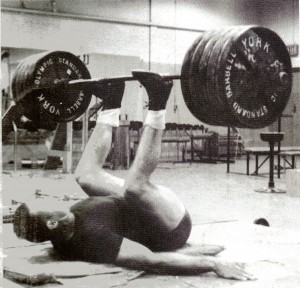
Oh yeah, keeping with my comment way above about the historical development of squatting, I wanted to show you how guys used to ‘leg press’ back in the day (this picture originally appeared on the cover of Hardgainer, just for the record). You either had to have two guys lift the bar to put it on your feet or do it yourself (use your imagination).
Given the choice, you’d have squatted too.
legpress001-300x288.jpg


הטענה שלו לא כל כך מרשימה בהתחשב בכך שהחשיבות שמיחסיים לביצוע סקוואט (ובצדק יש לציין) לא מתייחסת ליכולת פיתוח כוח של שריר ספציפי כזה או אחר אלא היכולת של הגוף לפתח כוח כמכלול דרך שרשרת תנועתית ועבודת ייצוב וקיבוע שכוללת כמעט את כל הגוף מה שלא קיים בלג-פרס.

לייל סתם גלש לקטע של הכוח תוך התעלמות ממהקשר אולי בשביל שהתשובה תהיה קצת יותר מעניינת ופחות שגרתית.
 
נערך לאחרונה:
  • פותח/ת השרשור
  • #8
לאורך הירך יש השפעה על מידת ההטייה של הגו בכדי לאזן את מרכז הכובד (ירך ארוכה יותר הטייה).

מחקרית זה הוכח שנטייה שכזו עלולה להוביל לכאבי גו יותר גדולים בעת ביצוע התרגיל או שיש אפשרות לעבוד דרך זה?טכניקה?
 
נערך לאחרונה:
טימור אם אתה קורא את זה, כנראה שהצדק היה עמך 😃

מצחיק שהיה לנו את הדיון הזה בדיוק לפני יומיים.

סקוואט זה אחלה תרגיל. מסכים לחלוטין עם לייל שלא כל אחד חייב לבצע אותו, אך בכל זאת, אם מישהו כן יכול לבצע, לא הייתי מוותר עליו כל כך מהר. לדעתי לג פרס אם כבר זה תוסף שאפשר להשתמש בו לסקוואט. כתחליף, לא הייתי ממהר לתת מבלי שהייתי בטוח במאה אחוז שישנה בעיה.
וכן טימור, זה שאתה מטר 90 וקשה לך לעשות סקוואט זה נכון, אבל פה בדיוק העוצמה שלך 👑.

מעבר לכך, זה לא כל כך חדש שאתלטים שונים עובדים בעבודה של כוח על רגל-רגל ולאו דווקא שני רגליים ביחד, במיוחד באימונים פולימטרים וספיצפים. הם כן עושים סקוואט דדליפט והנפות בשלבים של הכנות ושיפור יכולות הכוח, זה בטוח.

לייל לא אמר משהו לא הגיוני, בסך הכל, אם המשקל בלג פרס עולה, אז הכוח ברגליים משתפר בהתאם. הוא לא מדבר על כוח כללי של כל הגוף, הוא כותב ספציפית לרגליים גדולות ומה לעשות, גם חזקות יותר.

אגב למי שתוהה, אף אחד בפורום של ריפטוי לא קוטל את המאמר הזה כל כך מהר... גם ריפטוי עצמו לא ממש קוטל את לייל (כבוד לקולגות?) הוא פשוט אומר שלג פרס מבחינתו זה מיותר למי שיודע לבצע סקוואט, ואצל ריפטוי כל אחד יכול לבצע סקוואט (לטענתו, אבל אני נוטה להסכים עימו).

בכל אופן, המאמר הזה יפה מאוד, מדוייק להפליא. הוא משקף את דעתי לגמרי. סקוואט זה תרגיל זהב, מי שיכול לעשות שיעשה. מי שלא, יש לו אלטרנטיבות אחרות וטובות לא פחות. זה למה לא צריך להקשיב להארדקורים שלא רואים שום דבר חוץ מקו החשיבה שלהם.
 
נערך לאחרונה:
הטענה שלו לא כל כך מרשימה בהתחשב בכך שהחשיבות שמיחסיים לביצוע סקוואט (ובצדק יש לציין) לא מתייחסת ליכולת פיתוח כוח של שריר ספציפי כזה או אחר אלא היכולת של הגוף לפתח כוח כמכלול דרך שרשרת תנועתית ועבודת ייצוב וקיבוע שכוללת כמעט את כל הגוף מה שלא קיים בלג-פרס.

לייל סתם גלש לקטע של הכוח תוך התעלמות ממהקשר אולי בשביל שהתשובה תהיה קצת יותר מעניינת ופחות שגרתית.

נקודה נכונה....אישית אני מאמין בזה גם ובסופו של דבר כל בנאדם שיצטרך לבחור רק תרגיל אחד בודד לכל שריר בגוף היה בוחר סקוואט לרגליים....
 
  • פותח/ת השרשור
  • #11
טימור אם אתה קורא את זה, כנראה שהצדק היה עמך 😃

מצחיק שהיה לנו את הדיון הזה בדיוק לפני יומיים.

סקוואט זה אחלה תרגיל. מסכים לחלוטין עם לייל שלא כל אחד חייב לבצע אותו, אך בכל זאת, אם מישהו כן יכול לבצע, לא הייתי מוותר עליו כל כך מהר. לדעתי לג פרס אם כבר זה תוסף שאפשר להשתמש בו לסקוואט. כתחליף, לא הייתי ממהר לתת.
וכן טימור, זה שאתה מטר 90 וקשה לך לעשות סקוואט זה נכון, אבל פה בדיוק העוצמה שלך 👑.

מעבר לכך, זה לא כל כך חדש שאתלטים שונים עובדים בעבודה של כוח על רגל-רגל ולאו דווקא שני רגליים ביחד, במיוחד באימונים פולימטרים וספיצפים. הם כן עושים סקוואט דדליפט והנפות בשלבים של הכנות ושיפור יכולות הכוח, זה בטוח.


אגב למי שתוהה, אף אחד בפורום של ריפטוי לא קוטל את המאמר הזה כל כך מהר... גם ריפטוי עצמו לא ממש קוטל את לייל (כבוד לקולגות?) הוא פשוט אומר שלג פרס מבחינתו זה מיותר למי שיודע לבצע סקוואט, ואצל ריפטוי כל אחד יכול לבצע סקוואט (לטענתו, אבל אני נוטה להסכים עימו).

נ.ב

לייל לא אמר משהו לא הגיוני, בסך הכל, אם המשקל בלג פרס עולה, אז הכוח ברגליים משתפר בהתאם.


לינק?😃
 
ריפטו פשוט לא מתעניין בפיתוח גוף או גודל רגליים. איך הוא אומר? "אני לא מאמן רגליים". מענינת אותו תנועה של כל הגוף, ומהבחינה הזו, לטענתו, אין לתרגיל הזה שימוש.
 
לייל צריך להפסיק לדבר על דברים שהוא לא מבין בהם: אימונים.

נכון, אפשר לגדול בלי סקוואטים. גילינו את אמריקה.
 
לא יודע אם את אמריקה, אבל אם שאלו אותו, יש לזה סיבה. רוב הפורומים מערבבים מפתחי גוף וpowerlifters, שיש להם מטרות שונות ודגשים שונים. שווה להזכיר שאפשר לגדול בלי סקוואטים (אבל הרבה פחות כיף).
 
זה די ברור שאפשר לגדול בלי סקוואטים, או בלי כל תרגיל אחר לצורך העניין. אני פשוט לא מבין למה שואלים דווקא אותו. זה ממש לא תחום ההתמחות שלו. הוא לא פאוורליפטר, ולא מפתח גוף, ולא מרים משקולות.
 
זה די ברור שאפשר לגדול בלי סקוואטים, או בלי כל תרגיל אחר לצורך העניין. אני פשוט לא מבין למה שואלים דווקא אותו. זה ממש לא תחום ההתמחות שלו. הוא לא פאוורליפטר, ולא מפתח גוף, ולא מרים משקולות.

אבל הוא מאמן לפחות את הסוג הראשון והאחרון שהזכרת (אם סופרים את הלסביות ואת חברה שלו).
 
גם אני חושב שלייל צריך להשאר בתחום שלו, ולהשאיר את תחומי פיתוח הגוף, פאוורליפטינג והרמת משקולות למומחים בתחום.


נ.ב
כמו שציינו, ריפ אמר שהוא לא מאמן רגליים, ו"BIG LEGS" (היפרטרופיה) אף פעם לא היה כוס התה שלו.

אחת התגובות המצחיקות של הגולשים הייתה "המסקנה מהמאמר של לייל: לג פרס רגל אחת משפר ביצועים ברכיבת אופניים" 🤡
 
מוזר שאתה אומר את זה; בדיוק היום, אחד המדריכים החדר הכושר דיבר איתי על לחיצות רגלים, והוא סיפר על ספורטאי בתחום רכיבת אופניים שעושה בדיוק את זה - לג פרס, כל רגל בנפרד, במשקלים גבוהים וROM מאד ספציפי.
 
מוזר שאתה אומר את זה; בדיוק היום, אחד המדריכים החדר הכושר דיבר איתי על לחיצות רגלים, והוא סיפר על ספורטאי בתחום רכיבת אופניים שעושה בדיוק את זה - לג פרס, כל רגל בנפרד, במשקלים גבוהים וROM מאד ספציפי.
זה מצחיק ברמה שאם המאמר פונה לקהל הרחב אז היה מטופש להזכיר את העובדה שקבוצת רוכבי אופניים מתאמנת עם לג פרס 😃
 
שימו לב! השרשור ישן: לא היו תגובות בשרשור מעל 90 יום.

ייתכן שהתוכן בשרשור כבר אינו רלוונטי ולכן עדיף לפתוח שרשור חדש.
Back
למעלה תחתית